
TL;DR:
- A finance firm's staff training guide systematically onboarding, training, and verifying the competency of team members prevents skill gaps, audit issues, and high turnover. It includes a structured 30-60-90 day plan, role-specific training, compliance modules, and supervisory verification documented through an integrated system. Effective management requires ongoing skills analysis, scenario validation, and utilizing tools that consolidate training records for audit readiness and continuous staff development.
A finance firm staff training guide is the documented framework that defines how your firm onboards, develops, and verifies the competency of every finance professional on your team. The industry term for this is a staff learning and development plan, and it covers structured onboarding phases, role-specific technical training, FINRA compliance requirements, and supervisory verification. Without it, you get inconsistent skill levels, audit exposure, and high turnover in the first 90 days. This guide gives HR managers and firm leaders a practical, operational blueprint for building one that works.
What are the essential components of a finance firm staff training guide?
A finance firm staff training guide covers five distinct areas, and skipping any one of them creates gaps that show up either in performance reviews or regulatory audits.
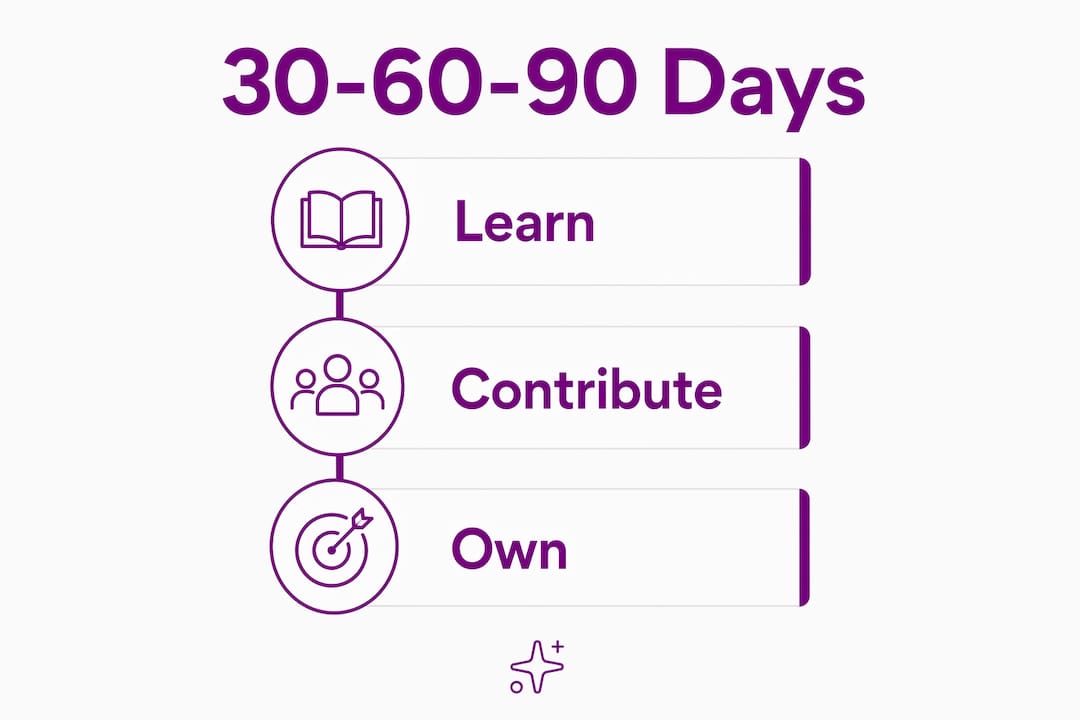
Structured onboarding with phased milestones. The 30-60-90 day framework is the standard for finance onboarding, with phases organized around learning, contributing, and owning. Each phase has defined deliverables, not just a list of modules to complete.
Technical skills training by role. Finance teams are not homogeneous. An FP&A analyst needs Excel modeling and BI tools like Power BI or Tableau. A controller needs ERP fluency in systems like NetSuite or SAP. A staff accountant needs month-end close procedures and reconciliation workflows. Your financial training manual must map tools and processes to each role explicitly.
Compliance training with documented completion. FINRA's Firm Element continuing education requires an annual written training plan based on a needs analysis, with completion by all registered individuals. This is not optional, and the documentation requirements are specific.
Cybersecurity and AML training. Annual cybersecurity training must cover phishing, password security, and social engineering, with records maintained for audits. Anti-money laundering training carries the same annual mandate for most registered firms.
Supervisory verification and sign-off. Training attendance records alone do not satisfy regulators. Supervisors must verify competency through observation, testing, or scenario-based validation, and that verification must be documented.
Here is what a complete financial training manual includes at minimum:
- A written needs analysis updated annually
- Role-based learning paths for each position (FP&A, Accounting, Controllers, Compliance)
- A 30-60-90 day onboarding schedule with named milestones
- Compliance module library covering FINRA Firm Element topics, AML, and cybersecurity
- Attendance and completion records with content version numbers and learner attestations
- Supervisory sign-off fields tied to each training phase
Pro Tip: Build your training guide as a living document with a version number and a review date. When FINRA auditors ask for your Firm Element plan, they want to see that it was updated this year, not three years ago.
How to design a 30-60-90 day onboarding plan for finance staff
The 30-60-90 day onboarding plan is the most practical tool for finance team onboarding because it gives both the new hire and the manager a shared map of expectations. Each phase has a distinct purpose, and the activities in each phase should reflect that purpose directly.

Phase 1: Days 1 to 30 (Learn). The new hire absorbs the firm's systems, processes, and culture. Activities include system access setup, shadowing senior staff, completing foundational modules in Excel and financial analysis, and reviewing the firm's chart of accounts and reporting structure. The goal is orientation, not output.
Phase 2: Days 31 to 60 (Contribute). The hire begins executing supervised tasks. For an FP&A analyst at a mid-size advisory firm, this means building a first budget variance report under review. For a staff accountant, it means completing a supervised month-end close. Role-specific training in ERP workflows and firm-specific processes runs in parallel. Platforms like CFI for Teams offer structured FP&A and accounting tracks that fit cleanly into this phase.
Phase 3: Days 61 to 90 (Own). The hire takes independent ownership of assigned responsibilities. Certification milestones like the FMVA® from the Corporate Finance Institute are appropriate targets for this phase. Managers conduct a formal competency review at day 90, documenting the outcome.
Here is a sample milestone table for a staff accountant role:
| Phase | Milestone | Verification method |
|---|---|---|
| Days 1 to 30 | Complete ERP navigation training | Quiz score of 80% or above |
| Days 1 to 30 | Shadow two full month-end closes | Supervisor sign-off |
| Days 31 to 60 | Complete first supervised close independently | Manager review of output |
| Days 31 to 60 | Finish FINRA Firm Element compliance modules | Completion record with attestation |
| Days 61 to 90 | Own reconciliation workflow without supervision | Performance review documentation |
| Days 61 to 90 | Complete FMVA® certification (if applicable) | Certificate on file |
Setting SMART goals for each milestone is what separates a real onboarding plan from a checklist. "Complete ERP training" is not a goal. "Score 80% or above on the NetSuite navigation assessment by day 21" is a goal you can track and verify.
Pro Tip: Schedule a 15-minute check-in at the end of weeks 2, 6, and 10. These are not performance reviews. They are early-warning conversations that surface confusion before it becomes a competency gap.
For new hire training management in small finance firms, the 30-60-90 plan also serves as the primary documentation artifact if a hire does not work out. A well-documented plan protects the firm.
How to ensure compliance and supervisory verification in finance staff training
Compliance training in a finance firm is not a checkbox. It is a documented system with specific regulatory requirements, and the documentation is what gets tested during an audit.
FINRA Rule 3120 mandates a documented annual supervisory control system testing report. Rule 3130 requires annual CEO certification of the firm's compliance processes. Both rules require that reports include testing details, results, exceptions, and proposed changes reviewed by senior management. HR managers are typically responsible for maintaining the records that feed these reports, even if the CEO signs them.
The Firm Element continuing education plan must be written, updated annually based on a needs analysis, and completed by all registered individuals. The needs analysis should reference the firm's business activities, regulatory developments from the prior year, and any deficiencies identified in supervisory reviews. Firms that skip the needs analysis step and simply reuse last year's modules are out of compliance, even if all staff completed the training.
Completion records must include the content version, delivery date, learner attestation, and be rapidly retrievable for audit purposes. A spreadsheet stored on a shared drive does not meet this standard reliably. A system that timestamps completion and locks the record does.
Audit readiness depends on documented supervisory verification, not just having training policies in place. A firm that can produce a signed supervisor attestation for every training milestone is in a fundamentally different position than one that can only show a completion email.
Practical steps for maintaining audit-ready compliance documentation:
- Assign a named compliance training coordinator (not just "HR") who owns the annual needs analysis
- Store training records in a system that captures content version, date, and learner name in a single retrievable record
- Schedule the annual Firm Element plan update in Q4 so it is ready before the new calendar year
- Document cybersecurity training separately from general compliance training, as audit evidence requirements include risk assessments and security event logs in addition to attendance records
- Retain all training records for a minimum of three years, or longer if your firm's written supervisory procedures specify a different retention period
What are the best practices for ongoing staff development in finance firms?
Onboarding ends at day 90. Staff development in finance does not. The firms that retain strong finance professionals are the ones that treat learning as an ongoing operational function, not an annual compliance obligation.
Skills gap analysis is the starting point for any ongoing development program. Map each role's required competencies against each team member's current demonstrated skills. The gaps you find should drive your training calendar for the next 12 months, not a generic catalog of available courses.
Role-based learning paths work better than firm-wide training programs because finance roles diverge significantly after onboarding. An FP&A manager needs scenario modeling and executive communication skills. A senior accountant needs advanced close management and audit preparation. A compliance officer needs regulatory update training specific to their registration type. Blending technical skills with soft skills in each path produces better outcomes than treating them as separate tracks.
Scenario-based validation before go-live on new systems or processes is one of the most underused practices in finance firms. Completing a training module is weak evidence of readiness. Having a staff member walk through an exact workflow in a test environment, with a supervisor observing, is strong evidence. This distinction matters during audits and during month-end close when errors are expensive.
Pro Tip: Schedule refresher training during the week before month-end close, not during it. Staff who complete a 20-minute scenario review before a high-pressure period make fewer errors than those who receive training reactively after an incident.
Encouraging certifications like the FMVA® from the Corporate Finance Institute or the CFA creates a shared standard across the team. It also gives ambitious staff a visible development path, which directly affects retention. Firms that fund one certification per year per eligible employee report stronger engagement than those that treat professional development as a personal expense.
Which tools support effective finance staff training management?
The right finance firm training management software does three things: delivers content consistently, tracks completion with audit-ready records, and gives managers visibility into where each team member stands.
| Tool type | Primary function | Best for |
|---|---|---|
| Learning Management System (LMS) | Content delivery, completion tracking, assessment scoring | Firms with 10 or more staff needing role-based paths |
| Compliance training providers (e.g., STC, CFI) | FINRA Firm Element content, finance skills courses | Registered firms needing pre-built regulatory content |
| Onboarding platforms | Document management, training checklists, supervisor sign-off | Firms managing new hire workflows across multiple roles |
| Video-based training tools | Blended learning, procedure walkthroughs, quick reference | Remote teams or firms with high visual-process content |
The case for onboarding video formats in finance training is stronger than most HR managers expect. Short procedural videos for ERP workflows, reconciliation steps, or compliance procedures reduce the time supervisors spend on one-on-one instruction. They also create a consistent reference that new hires can revisit without asking a colleague.
Structured learning platforms reduce inconsistency in training quality and give managers visibility through completion and assessment tracking. This visibility is especially valuable during month-end close periods, when you need to know exactly who has completed which training before assigning independent tasks.
For small finance firms, the practical requirement is a platform that consolidates training materials, tracks completion with timestamps, and produces a retrievable record without requiring a dedicated IT team to maintain it.
Key takeaways
A finance firm staff training guide works only when it combines structured onboarding phases, role-specific learning paths, and audit-ready compliance documentation into a single, maintained system.
| Point | Details |
|---|---|
| Use the 30-60-90 framework | Structure onboarding into learn, contribute, and own phases with named milestones and verification methods. |
| Document compliance training specifically | FINRA Firm Element records must include content version, delivery date, and learner attestation to satisfy audit requirements. |
| Validate with scenarios, not just modules | Scenario-based walkthroughs before live work provide stronger competency evidence than completion records alone. |
| Run annual skills gap analysis | Map each role's required competencies against current staff skills to drive your training calendar, not a generic course catalog. |
| Centralize records for retrieval | Store training records in a system that timestamps and locks entries so they are rapidly retrievable during audits. |
Why most finance training guides fail before the first audit
I have seen finance firms with beautifully formatted training manuals that fell apart the moment a FINRA examiner asked for the supervisory verification records. The manual existed. The training happened. But the documentation was scattered across email threads, shared drives, and a spreadsheet that nobody had updated in eight months.
The problem is not that HR managers do not care about compliance. The problem is that most finance firm training guides are designed as documents, not as systems. A document tells you what to do. A system makes sure it gets done and records that it happened.
The other pattern I see consistently is the separation between compliance training and practical skills training. Firms treat them as two different programs with two different owners. Compliance goes to the compliance officer. Skills training goes to department managers. Nobody owns the integrated picture, and new hires end up with a fragmented experience that does not connect regulatory requirements to actual job performance.
The firms that get this right treat the training compliance connection as a single workflow. The 30-60-90 plan includes both the FINRA Firm Element modules and the ERP scenario walkthroughs. The supervisor sign-off covers both. The record system captures both. That integration is what makes a training guide audit-ready rather than just well-intentioned.
If you are building or rebuilding your finance firm's training guide, start with the documentation architecture before you touch the content. Know exactly where every completion record will live, who can retrieve it, and how fast. Then build the content around that infrastructure.
— Chris
How OnboardingGenie helps finance firms manage staff training
Finance HR managers who have tried to run compliant training programs out of spreadsheets and email know the problem firsthand. Records get lost, attestations go unsigned, and version control on training materials becomes a full-time job.
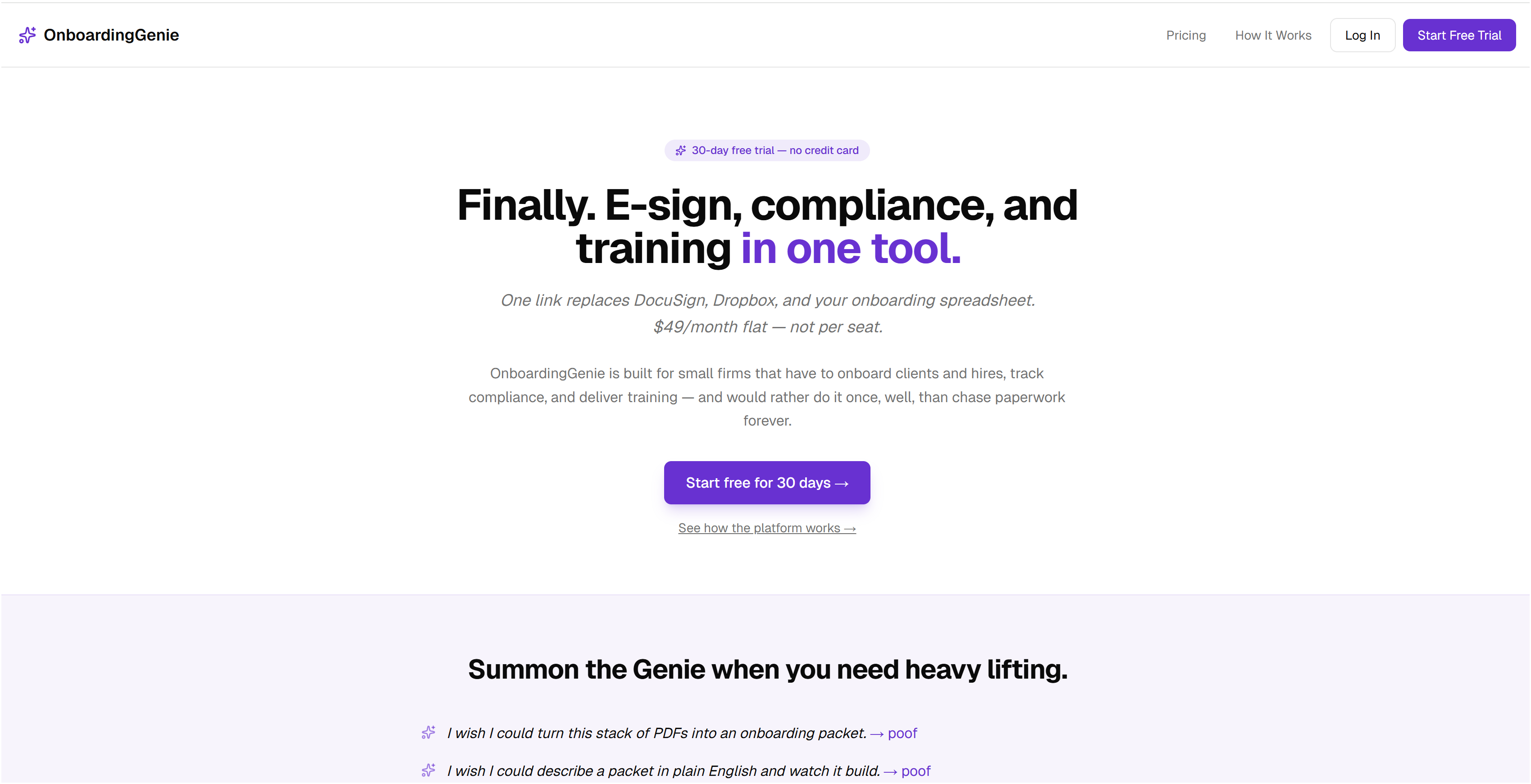
OnboardingGenie consolidates training checklists, document sign-offs, and completion records into a single branded portal. For finance firms, that means your 30-60-90 day onboarding plan, your FINRA Firm Element attendance records, and your supervisory verification sign-offs all live in one place with timestamps and learner attestations built in. No separate LMS, no chasing PDFs, no spreadsheet archaeology before an audit. See how onboarding and training automation works for small finance firms, or review the platform workflow to evaluate fit before committing.
FAQ
What does a finance firm staff training guide include?
A finance firm staff training guide includes a structured 30-60-90 day onboarding plan, role-specific learning paths, FINRA Firm Element compliance training, cybersecurity and AML modules, and documented supervisory verification records with learner attestations.
How often must FINRA Firm Element training be completed?
FINRA Firm Element continuing education requires annual completion by all registered individuals, based on a written training plan updated each year through a formal needs analysis.
What records do finance firms need to keep for training audits?
Completion records must include the content version, delivery date, learner name, and attestation, and must be rapidly retrievable. Cybersecurity training records also require supporting risk assessments and audit logs.
What is the difference between Firm Element and Regulatory Element training?
Firm Element training is designed and delivered by the firm based on its specific business activities and annual needs analysis. Regulatory Element is a FINRA-administered program with standardized content that registered individuals complete on a set schedule determined by their registration date.
How do small finance firms manage training without a dedicated LMS?
Small finance firms can use HR onboarding platforms that consolidate training checklists, document sign-offs, and completion records in a single portal, eliminating the need for a separate enterprise LMS while still producing audit-ready documentation.